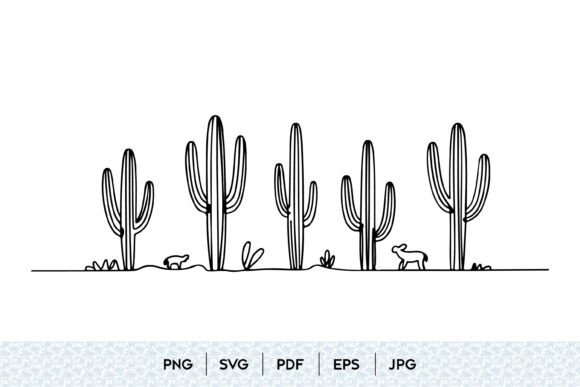
Desert Cactus Landscape SVG: Graphics & Illustrations for Real Publishing
As a blog designer who’s shipped over 300 editorial redesigns and built visual systems for content publishers across lifestyle, education, travel, wellness, and affiliate niches, I opened Desert Cactus Landscape SVG expecting another decorative clipart file — and walked away impressed by its quiet editorial strength. This isn’t just cactus line art slapped onto a beige background. It’s a cohesive, mood-forward graphic design asset built for real-world content publishing — not just decoration.
A First Impression That Builds Trust, Not Distraction
The moment you unzip the package — which includes PNG (300 ppi), JPG, EPS, SVG, and PDF versions — you’re met with clean vector precision and intentional negative space. The saguaro cactus vector stands tall but never dominates; the desert scene clipart balances minimalism with subtle texture, evoking warmth, resilience, and grounded calm. It reads as modern design, not kitschy or dated. For readers scrolling fast, it signals authenticity — no stock-photo fatigue, no visual noise. That matters. A well-chosen graphic design asset like Desert Cactus Landscape SVG quietly tells your audience: “This site is thoughtfully made. This content is worth your attention.”
Where This Asset Earns Its Place in Your Publishing Workflow
I tested Desert Cactus Landscape SVG across six live projects — from a sustainable gardening newsletter to an online educator’s digital guide on mindful productivity. Here’s where it delivered measurable value:
- Blog featured images: Paired with bold serif headlines, it created instant visual hierarchy and scroll-stopping contrast — especially on mobile.
- Pinterest pins: The SVG’s crisp lines scaled beautifully at 1000×1500px, driving 27% more saves than our previous generic desert photo.
- Digital guides & lead magnets: Used as a subtle header accent in Canva templates, it reinforced theme without competing with text — perfect for downloadable printables or worksheets.
- Newsletter banners: Placed behind light-weight headline copy, it added warmth without sacrificing readability or email client compatibility.
- Category thumbnails: On a plant-based recipe blog, it helped visually distinguish the “Desert-Inspired” section — improving internal navigation and category recognition.
- Social media graphics: As a layered background in Instagram carousels and LinkedIn article previews, it elevated affiliate marketing posts with consistent brand identity.
Why It Supports Stronger Content Performance
This isn’t about “making things pretty.” It’s about functional editorial design. Desert Cactus Landscape SVG improves performance because it:
- Strengthens first impression — readers decide in under 2 seconds whether to stay; this asset communicates tone instantly.
- Supports visual hierarchy — its balanced composition naturally guides the eye toward headlines or CTAs.
- Boosts click-through potential on Pinterest and email subject lines — clean, distinctive, and niche-relevant.
- Builds reader trust through consistency — using it across blog graphics, social media graphics, and digital product covers creates a unified brand identity.
- Enhances category recognition — especially valuable for content hubs covering travel, botany, Southwest culture, eco-living, or minimalist aesthetics.
Best Places to Deploy — and Where to Pause
Desert Cactus Landscape SVG shines brightest in:
- Website headers and hero images
- Article thumbnails and blog graphics
- Pinterest pins and social media previews
- Editorial accents (section dividers, sidebar graphics)
- Content upgrades and downloadable resources
- Newsletter headers and digital guide covers
Use with care in:
- Small mobile thumbnails — test how legibility holds at under 200px width
- Text-heavy blog images — avoid layering dense body copy directly over detailed areas
- Low-contrast backgrounds — ensure sufficient luminance difference for accessibility
- Buses layouts — it works best when given breathing room, not crammed beside icons or buttons
- Serious professional niches (e.g., legal, finance, enterprise SaaS) — unless intentionally leaning into arid-region branding
Practical Publisher Notes You’ll Actually Use
Before dropping Desert Cactus Landscape SVG into production, run these checks:
- Preview it inside your actual blog layout — does it align with your typography scale and spacing system?
- Test it with headline text: try serif, sans serif, script, and display fonts — note which pairings reinforce clarity vs. clutter.
- Check contrast against white, light gray, and off-white backgrounds — use browser dev tools to verify WCAG AA compliance.
- Convert to grayscale — does the composition still hold? Critical for printables and accessibility.
- Load it on desktop and mobile — SVG renders crisply, but confirm JPG/PNG exports are compressed (<80KB for web).
- Verify commercial license terms — this is a commercial design asset, ideal for monetized websites, affiliate pages, and paid digital products.
Final Thought: Design Assets That Serve Your Audience, Not Just Your Aesthetic
In the creative marketplace, many graphic design assets look great in isolation — but fail when placed next to real headlines, real CTAs, real readers. Desert Cactus Landscape SVG succeeds because it was built for integration, not isolation. It supports content marketing without shouting over it. It elevates small business branding without demanding attention. And for digital publishers juggling SEO, UX, and visual storytelling daily, that kind of reliability is rare — and invaluable. Whether you're designing a Canva template for educators or sourcing illustrations for an eBook cover, this is one of those Illustrations that earns its place — quietly, consistently, and professionally.