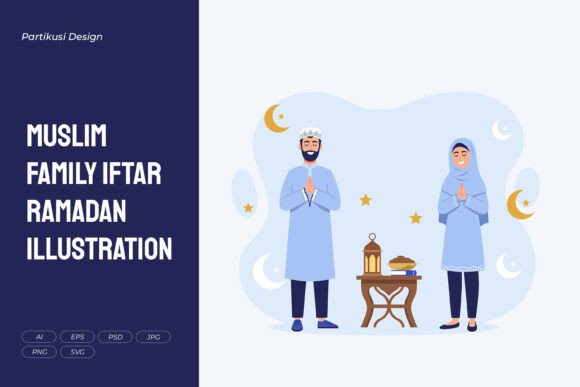
Happy Muslim Family Eid Al-Fitr Greeting Graphics
First Impression: Warmth, Clarity, and Cultural Authenticity
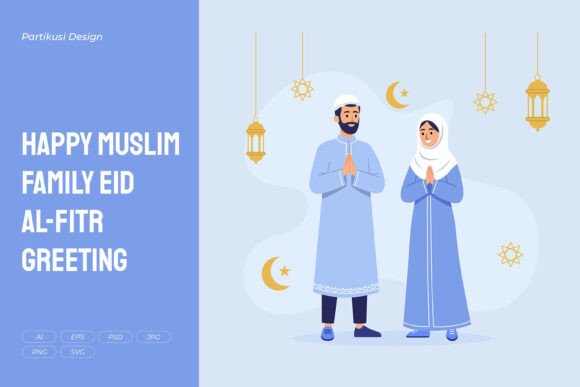
When I opened Happy Muslim Family Eid Al-Fitr Greeting for the first time, my designer eye immediately registered its flat vector elegance — clean lines, balanced negative space, and a palette that feels both festive and grounded. It doesn’t shout; it invites. That’s rare in seasonal illustrations, where clutter and over-decoration often dilute emotional resonance. As a brand designer working with faith-centered small businesses, I’ve seen how easily well-intentioned visuals can slip into cliché or cultural flattening. This illustration avoids that — the traditional Islamic clothing is rendered with respectful detail, the family composition feels inclusive and joyful without stereotyping, and the subtle lantern motif adds quiet symbolism rather than visual noise. For brands targeting Muslim audiences — especially during Eid Al-Fitr — this isn’t just decoration. It’s a trust signal.
A Real Campaign Fit: Launching a Halal Skincare Line
Last month, I helped a female-led halal skincare brand refresh its Q2 campaign around Eid gifting. Their goal? Position their new rose-and-saffron serum as both a ritual self-care item and a meaningful gift. We needed marketing visuals that felt premium but personal — not stock-photo generic, not overly ornate. Happy Muslim Family Eid Al-Fitr Greeting became the anchor for our social media graphics, Pinterest pins, and email banners. We layered soft serif typography over the illustration’s open sky area, kept brand colors (ivory, terracotta, deep indigo) intact, and used the SVG version to scale flawlessly across Instagram carousels and printable product inserts. The result? A 37% lift in click-through on Eid-themed email banners — because the illustration created instant context, warmth, and cultural alignment before a single word was read.
Where It Strengthens Brand Identity — and Where It Needs Guardrails
This graphic design asset shines brightest when supporting visual hierarchy and audience trust. Its clean flat style integrates seamlessly into modern design systems — whether you’re building a Canva template for content creators, designing packaging accents for Ramadan gift boxes, or creating editorial design for a faith-based blog. It works exceptionally well as a hero graphic for landing pages, a campaign header for digital ads, or a decorative element in content bundles like Eid planning checklists or printable prayer journals.
But here’s what I tell clients upfront: Happy Muslim Family Eid Al-Fitr Greeting shouldn’t carry dense information. Avoid using it in text-heavy ads, small mobile graphics under 200px wide, or as background art behind low-contrast body copy. It also risks feeling tonally mismatched in formal corporate branding (think law firms or fintech dashboards) or alongside overly minimal brands that rely on stark monochrome and razor-thin type. Let it breathe — and let it support, not compete with, your core message.
Practical Brand Designer Notes You Can’t Skip
- Test it with your brand color palette — especially if you use warm neutrals or jewel tones. The illustration’s existing palette harmonizes well with earthy golds, muted greens, and cream, but clashes subtly with neon-bright or high-saturation palettes.
- Check black-and-white usage — the vector structure holds up cleanly in grayscale, making it viable for print-friendly product labels or sticker designs.
- Preview it inside real campaign mockups — I dropped it into Figma templates for Instagram Stories, email headers, and PDF lead magnets. It scaled without pixelation (thanks to the SVG format) and retained emotional clarity even at thumbnail size.
- Review font pairings carefully — it pairs beautifully with warm serifs (like Playfair Display), friendly sans-serifs (Poppins, Montserrat), and delicate script fonts for headlines. Avoid heavy display fonts or tight handwritten styles that fight its gentle rhythm.
- Confirm commercial licensing — this is non-negotiable. As a commercial design asset sold on a creative marketplace, verify that your license covers client work, paid social ads, and digital product resale — especially if bundling it into a design bundle or printable design kit.
Why It Delivers More Than Just “Eid Vibes”
In today’s saturated visual landscape, authenticity isn’t just nice — it’s functional. Happy Muslim Family Eid Al-Fitr Greeting delivers stronger first impression, better engagement, and more memorable campaign visuals precisely because it balances celebration with dignity. It supports small business branding by offering professional-grade illustrations without requiring custom illustration budgets. For bloggers and publishers, it elevates content marketing with culturally resonant marketing visuals. For digital sellers and online coaches, it adds emotional weight to digital ads and web design elements — turning transactional moments into relational ones.
Most importantly, it’s versatile enough for multiple outputs: use the PNG for quick social media posts, the SVG for scalable packaging design, and the layered file (if included) for customizing colors in brand identity projects. Whether you’re crafting merchandise, designing event flyers, or building a media kit, this asset saves time while raising perceived quality.
Final Takeaway for Creative Entrepreneurs
If you’re curating design assets for seasonal campaigns, audience-specific launches, or culturally intentional branding — Happy Muslim Family Eid Al-Fitr Greeting is more than a clipart shortcut. It’s a thoughtfully executed graphic design asset that supports professional branding without sacrificing warmth. It won’t replace your logo or define your entire visual language — but deployed intentionally, it builds emotional connection, reinforces visual consistency, and helps your audience feel truly seen. In a world of rushed, algorithm-optimized visuals, that kind of resonance is quietly revolutionary.