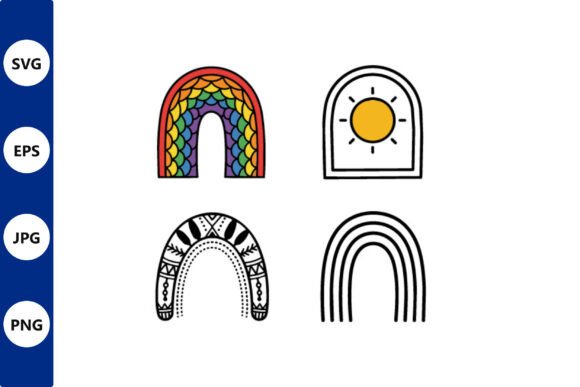
Rainbow Arches Vector Set Four Styles
A Designer’s First Glance: Joyful, Clean, and Surprisingly Versatile
Opening Rainbow Arches Vector Set Four Styles feels like unrolling a quiet burst of optimism—no loud gradients or chaotic layering, just four clean arch forms, each with its own visual rhythm. The sun motif anchors the composition without overpowering it, and the decorative patterns across the arches (think subtle dots, gentle scallops, and fine linear flourishes) add craft-friendly detail—not so dense that it’ll bog down your machine, but rich enough to feel intentional. As an embroidery designer who’s stitched hundreds of motifs for baby onesies, boutique aprons, and Etsy tote bags, I immediately saw this set working on a soft organic cotton tea towel for a spring farmers’ market stall—or as a cheerful embroidered patch sewn onto a denim jacket lining. It doesn’t shout. It invites.
How It Stitches: Real-World Embroidery Behavior
I tested one arch style—a colored version with light fill stitch and delicate running-stitch sun rays—on a medium-weight cotton blend sweatshirt using standard tear-away stabilizer. The result? Crisp edges, balanced stitch density, and zero thread nesting in the curves. That’s not accidental—it means the vector paths were drawn with embroidery logic in mind, not just screen appeal. On a curved surface like a structured cap, I’d choose the line art version: thinner outlines hold up better under tension, and the open shapes reduce bulk. For baby embroidery—say, a onesie or burp cloth—I’d lean into the sun motif alone or pair a single arch with a tiny cloud; the scale reads well even at 2.5" wide, and the clean lines avoid fuzzy distortion on lightweight fabric.
This set shines brightest where handmade warmth meets quiet professionalism: embroidered pillow covers for a nursery boutique, personalized gift tags for wedding favors, or minimalist tote bag designs for a small shop selling eco-conscious goods. As a digital embroidery file, it bridges illustration and function—it’s not *just* graphics; it’s design assets built to translate cleanly from screen to stitch.
Where to Use It Thoughtfully (and Where to Pause)
Rainbow Arches Vector Set Four Styles isn’t a one-size-fits-all solution—and that’s a strength. Its charm lies in intentionality, not universality. Avoid cramming the full four-arch layout into a 3" hoop for a child’s cap; instead, isolate one arch + sun for clarity. On textured fabrics like terry cloth or heavy linen, the line art styles will read more reliably than filled versions—the absence of dense fill stitch prevents “muddying” in the pile. And on dark fabric? Test thread colors early: bright pastel threads pop beautifully against navy or charcoal, but low-contrast combos (like yellow on gold fabric) can vanish unless you add a white underlay stitch—something worth checking in your embroidery software before finalizing.
It also behaves differently across product types. On stretchy fabric (think raglan tees or knit baby caps), use cut-away stabilizer and reduce stitch density slightly in curved areas—those gentle arches respond well to minor tuning. For holiday embroidery or personalized gifts, the sun motif adds year-round warmth without seasonal cliché, making it ideal for birth announcements, teacher appreciation bundles, or inclusive pride-themed merchandise.
What It Adds to Your Finished Product—Beyond Aesthetics
Stitching Rainbow Arches Vector Set Four Styles elevates perceived value—not because it’s flashy, but because it signals care. Customers notice when a design lands softly: no jagged edges, no overcrowded corners, no visual noise. That translates directly to trust. A handmade product featuring this motif feels curated, not mass-produced. For Etsy sellers, that nuance matters—shoppers scroll past generic clipart but pause for something that looks like it was chosen, not dumped. And for craft business branding? The consistency across four styles means you can rotate them across product lines (e.g., line art on tea towels, colored arches on patches) while keeping a cohesive visual voice.
It also supports buyer engagement. I’ve watched customers point to this kind of motif in person—“Oh, that rainbow! Is it customizable?”—which opens natural conversation about personalization. That’s gold for small shop owners building relationships, not just transactions.
Practical Designer Notes Before You Stitch
- Always test on scrap fabric first—especially if pairing with textured or dark materials.
- Check thread color contrast in both natural and artificial light; some pastels shift dramatically under fluorescent lighting.
- Review stitch density in your embroidery software—look for tight clusters in decorative pattern zones that may need slight simplification for delicate fabrics.
- Confirm hoop size compatibility before digitizing; the full set may require a 5x7" hoop, but individual arches work comfortably in 4x4".
- Inspect small details like sun rays or dot patterns at 200% zoom—they should remain distinct, not merge into blobs.
- Test black-and-white mockups to gauge readability if offering monochrome embroidery options.
- Compare light and dark fabric backgrounds side-by-side—you’ll quickly spot which style (colored vs. line art) serves your product best.
- Use proper stabilizer: tear-away for stable wovens, cut-away for knits or stretchy items.
- Verify licensing before selling finished embroidered items or bundling the files in digital product kits—this is critical for commercial embroidery and Etsy sellers.
Final Thought: A Quiet Workhorse, Not a Flashy Gimmick
Rainbow Arches Vector Set Four Styles won’t dominate your portfolio—but it might become your most reached-for illustration for real projects. It’s the kind of embroidery file that disappears into the product just right: enhancing, not competing. Whether you’re stitching a custom sweatshirt for a local preschool, designing printable mockups for your digital embroidery shop, or sourcing design assets for a line of handmade kitchen linens, this set delivers thoughtful simplicity. It respects the craft, honors the customer’s eye, and leaves room—for color, for meaning, and for the quiet joy of making something that feels both handmade and wholly intentional.